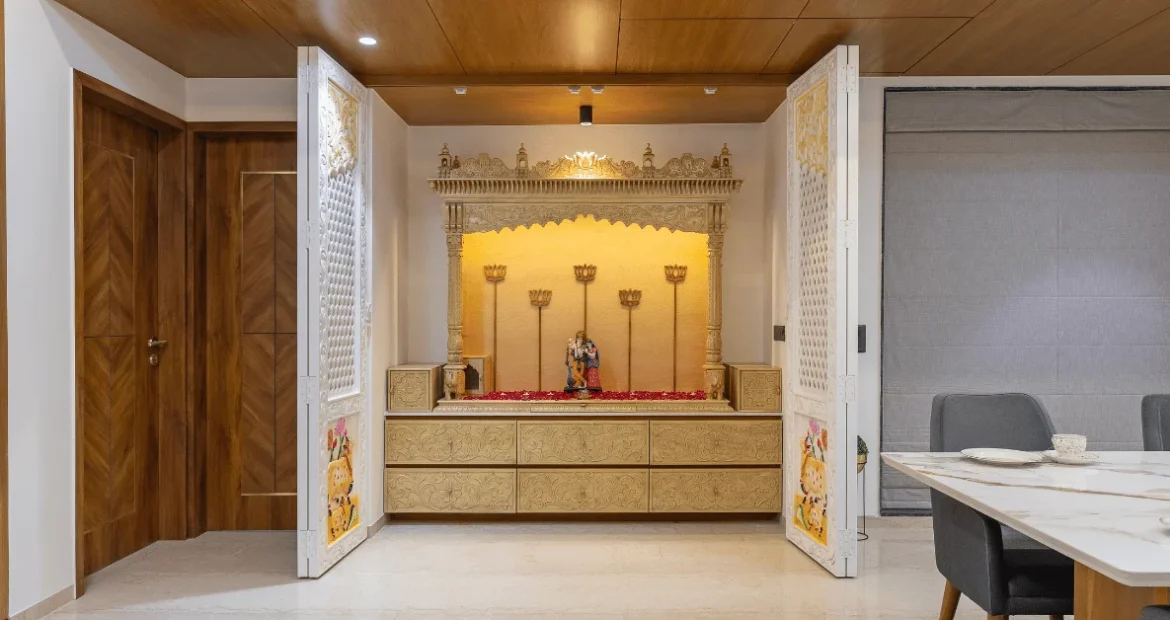
In almost every Indian home, the mandir in home is more than just a physical space—it’s where the day begins, where gratitude is expressed, and where the mind finds calm. As an interior designer in Ahmedabad, we have worked with families living in villas, apartments, and compact flats, and one question comes up every single time:
“What is the correct mandir direction as per Vastu?”
At Magic Space Designs, we don’t treat Vastu as superstition or decoration. We treat it as a functional energy-planning system—very similar to how good lighting or ventilation works. When your temple at home is placed correctly, it supports mental clarity, routine, and emotional balance. When it isn’t, people often feel something is off, even if they can’t explain why.
This guide is written to be practical, people-first, and experience-based—not copied rules. By the end, you’ll know exactly:
- The best direction for mandir at home
- What to do for east, west, north, and south-facing houses
- Common mistakes to avoid (especially in flats)
- How to decorate your home temple the right way
Why Mandir Direction Matters in Vastu Shastra
Vastu Shastra works on the idea that directions carry different energy qualities. Just like a plant grows better near sunlight, spiritual activities work best in zones that support calmness and focus.
According to classical vastu shastra tips for pooja room, the mandir should be placed where:
- The mind naturally feels calm
- Distractions are minimal
- Positive energy is preserved
From years of on-site experience in Ahmedabad homes, we’ve noticed one thing clearly:
Homes with correctly placed pooja rooms often have more consistent prayer routines and less clutter around the mandir area.
Best Direction for Mandir at Home (As Per Vastu)
Northeast (Ishan Kon) – The Most Auspicious Direction
The Northeast is universally considered the best direction for mandir at home.
Why it works:
- It represents clarity, wisdom, and spirituality
- Morning sunlight naturally energises the space
- Ideal for meditation and prayer
Practical tip:
If you can choose only one rule to follow, choose this one—place the mandir in the northeast whenever possible.
God Facing Direction in Home: A Commonly Confused Rule
Many people mix up mandir direction and god facing direction in home.
Correct positioning:
- You should face East or North while praying
- Idols should face West or East
- Never place idols facing South
This setup ensures alignment between the devotee and the energy flow.
Pooja Room Direction As Per House Facing
Not every home has a perfect northeast corner—especially flats. Here’s how to adapt wisely.
Pooja Room Vastu for East Facing House
East-facing homes already align well with spiritual energy.
Ideal placement:
- Mandir in northeast or east
- You face east while praying
Avoid:
- Mandir near bathrooms or staircases
This setup works especially well for families who perform daily pooja.
Pooja Room Vastu for West Facing House
West-facing homes need a bit more planning.
Best options:
- Northeast (first choice)
- North (second-best option)
Important:
Avoid placing the mandir directly in the west zone. Balance matters more than symmetry.
Pooja Room for North Facing House
North-facing homes are naturally supported by wealth and growth energy.
Recommended directions:
- Northeast
- North
Design insight from Magic Space Designs:
In north-facing flats, a wall-mounted mandir in the northeast corner works beautifully without occupying floor space.
Pooja Room Vastu for South Facing House
South-facing homes often worry people—but they can be very Vastu-compliant.
Correct placement:
- Northeast (best)
- East (acceptable)
What to avoid strictly:
- Mandir in the south or southwest
- Idols facing south
Vastu Tips for Mandir in Flat (Very Practical)
Apartments come with space constraints. Here’s what actually works in real flats—not textbook diagrams.
Best flat-friendly mandir placements:
- Wall-mounted mandir in northeast
- Dedicated cabinet away from kitchen/bathroom walls
- Living room mandir (only if placed thoughtfully)
Avoid these common flat mistakes:
- Mandir above shoe racks
- Mandir sharing a wall with toilets
- Mandir inside bedrooms (unless unavoidable and well-separated)
If space is tight, intention + direction matters more than size.
How to Decorate Home Temple (Vastu-Friendly & Practical)
Decoration isn’t about luxury—it’s about clarity and purity.
Vastu-approved decoration tips:
- Use light colours: white, cream, soft yellow
- Prefer natural materials: wood, stone, brass
- Keep the space clutter-free
Lighting matters more than people think:
- Warm LED or diya light
- Avoid harsh spotlights
- Natural light is a bonus
From experience:
Homes that over-decorate mandirs often stop using them daily. Simplicity encourages routine.
Height, Size & Placement Rules You Should Know
Idol placement rules:
- Idols should be at chest or eye level
- Leave space between idols and the back wall
- Avoid cracked or broken idols
Mandir structure:
- No storage below idols
- Do not place mandir under stairs
- Avoid sharing mandir wall with bathrooms
These are among the most ignored yet impactful vastu shastra interior design Ahmedabad principles.
Common Mandir Vastu Mistakes (Seen in Real Homes)
Here are mistakes we repeatedly correct during home redesigns:
- Mandir facing south “because it fits the layout”
- Mandir next to fridge or microwave
- Too many idols in a small space
- Dark colours dominate the pooja area
Vastu is less about fear—and more about flow.
Real-Life Insight: A Small Change, Big Difference
In a 2BHK flat project handled by Magic Space Designs, the mandir was originally placed next to a bathroom wall. The family complained of restlessness during prayer.
We:
- Shifted the mandir to a northeast wall
- Changed the lighting from white to warm
- Reduced clutter
Within weeks, the family told us they felt more connected during pooja. No rituals changed—only placement did.
Final Takeaway: Follow Vastu With Practical Sense
You don’t need a palace or a perfect floor plan to follow Vastu correctly.
Remember these essentials:
- Northeast is king
- Face east or north while praying
- Keep the mandir clean, calm, and clutter-free
- Adapt Vastu rules to your home—not the other way around
If you’re planning or redesigning your pooja room, following these vastu shastra tips for pooja room can bring clarity—not just spiritually, but emotionally too.
Need expert guidance?
If you’re planning or redesigning your pooja room, following these vastu shastra tips for pooja room can bring clarity—not just spiritually, but emotionally too. At Magic Space Designs, we blend modern interiors with practical Vastu so your home feels balanced, functional, and peaceful. Call us to get personalised guidance on mandir placement, pooja room design, and Vastu-aligned interiors tailored to your home layout.
Good Vastu doesn’t restrict your home. It supports it.
Frequently Asked Questions: Mandir Direction & Pooja Room Vastu
1. In which direction we should keep god in home?
According to Vastu Shastra, the best direction to keep god in home is the Northeast (Ishan Kon). This direction is considered the most sacred and energetically pure. If the northeast is not available, the east or north direction can also be used. Avoid placing the mandir in the south or southwest of the house.
2. According to Vastu, mandir should be in which direction?
As per Vastu Shastra tips for pooja room, the mandir should ideally be placed in the northeast direction of the home. This placement supports calmness, spiritual focus, and positive energy flow. In flats or space-restricted homes, the north or east zone is the next best option.
3. God idols should face which direction?
God idols should ideally face east or west, while the person praying should face east or north. This alignment is believed to support concentration and spiritual clarity. Avoid placing idols facing south, as it is not recommended in Vastu for pooja rooms.
4. Which side pooja room should face?
The pooja room should face east or north so that the person performing prayers naturally faces these directions. This applies to all house types—flats, villas, or independent homes—and works well for daily pooja as well as meditation.
5. Best place for pooja room as per Vastu?
The best place for pooja room as per Vastu is the northeast corner of the house. If that is not possible, the east or north side of the home is acceptable. The pooja room should never be placed near toilets, under staircases, or sharing a wall with a bathroom.
6. How to find north east direction in home?
To find the northeast direction in your home:
- Use a mobile compass app while standing at the centre of the house
- Identify north first, then locate the corner between north and east
- The corner diagonally opposite southwest is always northeast
Interior designers and Vastu consultants often verify this during layout planning to avoid errors.
7. Mandir in drawing room – is it allowed as per Vastu?
Yes, a mandir in drawing room is allowed if placed correctly. The mandir should be positioned in the northeast corner of the living room, away from television units, shoe racks, or heavy furniture. A wall-mounted or dedicated cabinet mandir works best in flats.
8. How to make a temple at home as per Vastu?
To make a temple at home following Vastu:
- Choose northeast, east, or north direction
- Use light colours like white, cream, or light yellow
- Place idols at chest or eye level
- Keep the mandir clean, clutter-free, and well-lit
- Avoid storage below idols